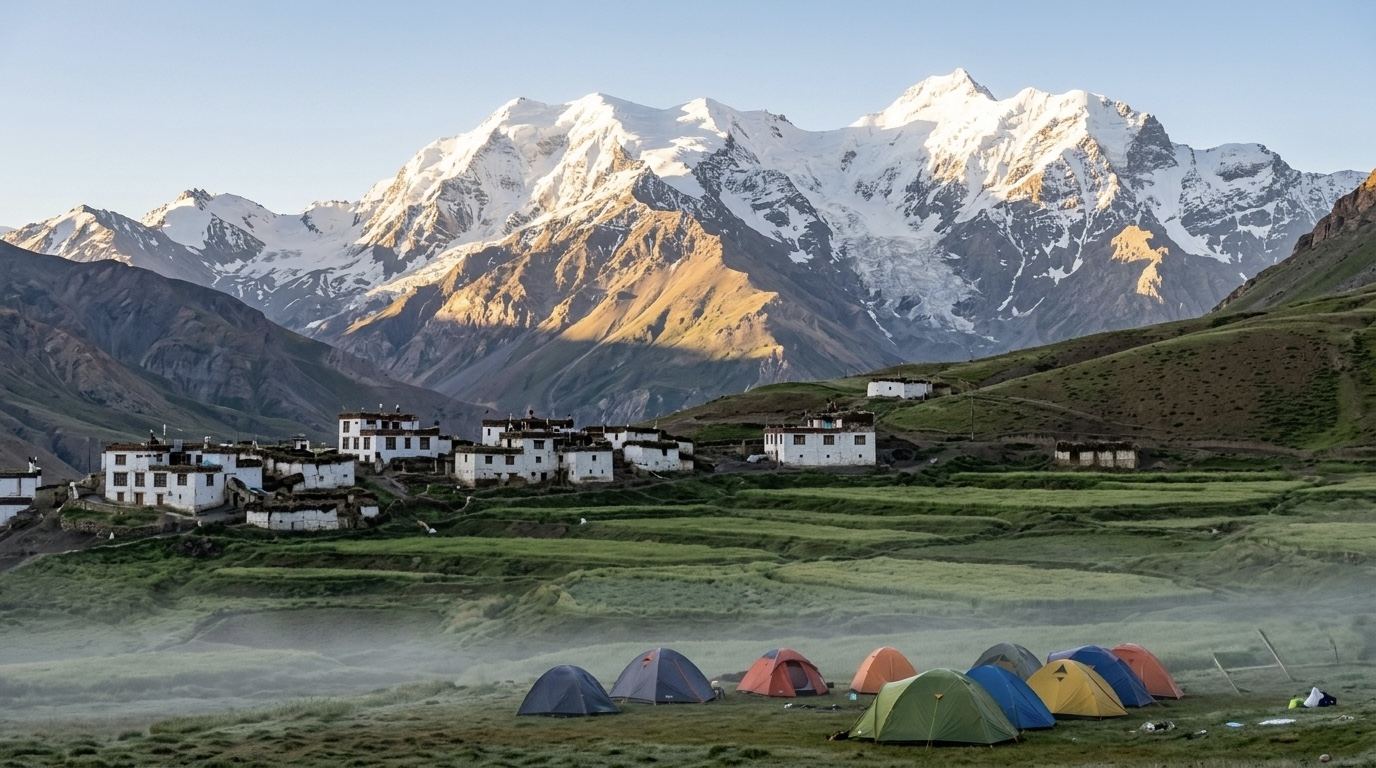
There are two Spitis. The summer valley — green pea fields, motorcycle convoys, cafés full of travellers — is the one most people meet. Then there is the winter valley: white from riverbed to ridgeline, nearly silent, minus twenty at night, running on wood stoves, butter tea and the patience of people who have wintered at 4,000 m for a thousand years.
Winter Spiti has become quietly famous — for snow leopards, for frozen-world photography, for the bragging rights of having done it. This guide is the honest version: what is actually open, how cold it actually gets, and how to do it safely rather than heroically.
The one road that stays open
Everything about winter Spiti starts with a single fact: the Manali route closes; the Shimla route stays open.
The road from Manali crosses Kunzum La at about 4,550 m and is buried by snow from roughly late October or November until May or June. In winter it does not exist as an option. The Shimla–Kinnaur road (NH-5 through Rampur, Reckong Peo, Nako and Tabo) is a lifeline road, maintained through winter because the villages along it depend on it. It is open in the practical sense — but snowfall, ice and occasional landslides can shut sections for a day or two, so a winter itinerary needs buffer days on both ends. HRTC buses ply the route through winter as conditions allow, and shared and private taxis run when the road is clear.
The drive from Shimla to Kaza takes two days in winter with an overnight halt (Kalpa, Nako or Tabo are the usual choices). This slower approach has a hidden benefit: you gain altitude gradually, which is exactly what your body needs.
How cold is cold?
Numbers first: daytime temperatures in Kaza and the high villages often stay below zero even in sunshine, and nights routinely fall to −15 to −25 °C. Cold snaps push past −30 °C. This is cold that changes how everything works:
- Water freezes in the pipes, so winter Spiti runs on stored water and traditional dry-compost toilets. Expect them, and appreciate them — they are the technology that makes winter habitation possible.
- Phones and cameras drain in minutes outdoors unless batteries are kept warm against your body.
- Diesel vehicles can refuse to start on the coldest mornings; local drivers know the tricks, which is one of many reasons to hire locally rather than self-drive in deep winter.
- The sun still burns. High-altitude UV plus snow glare means sunscreen and sunglasses are as essential as your down jacket.
What winter gives you in return
Plenty. The valley under snow is one of the most beautiful landscapes in the Himalaya, and you will share it with almost no one. Key Monastery wears a white cap; the Spiti river runs black between ice shelves; villages send up threads of smoke into blue air. The night skies are the year's sharpest — long, cold, crystalline nights over Orion and the winter Milky Way (our stargazing guide covers the winter sky in detail).
Winter is also festival season. Losar, the Tibetan new year, falls in the deep winter months, and villages celebrate with rituals, dances and community feasts that few outsiders ever see. And it is snow leopard season — from January to March the world's most elusive big cat descends with its prey to slopes around Kibber, Chicham and the Langza plateau. That subject deserves its own page: our snow leopard in Spiti guide explains how sightings really work.
Where to stay — and why it matters more in winter
In July, a bad room is an inconvenience. In January, warmth is the whole game. Winter accommodation in Spiti means stove-heated homestay rooms or properly insulated cabins with serious bedding. At The Cosmic Camp in Langza we stay open all winter — insulated cabins, bedding rated for high-altitude winter nights, hot Spitian food from the café, and yes, the homemade ice-cream parlour keeps churning, because eating ice cream at −20 °C is exactly the kind of story you come here for. Winter expeditions and 4x4 off-road experiences run for guests who want to go deeper into the frozen valley.
- Access: Shimla–Kinnaur road only; Manali route closed roughly Nov–May
- Temperatures: days near or below 0 °C, nights −15 to −30 °C
- Acclimatisation: non-negotiable — overnight in Kalpa/Nako/Tabo, then Kaza, before the high villages
- Cash and fuel: stock both in Kaza; nothing above it
- Buffer days: at least two, for snowfall and road closures
Safety, honestly
Winter Spiti is not dangerous for careful travellers, but it is unforgiving of casual ones. The three rules that matter: acclimatise properly (altitude sickness is harder to manage when evacuation roads may be snowed in), keep plans flexible (the road decides your schedule, not the other way round), and lean on local knowledge — drivers, hosts and guides who winter here read the conditions better than any app. Book with hosts who actually operate in winter, tell someone your itinerary, and carry personal medication for the full trip plus a few days.
If this is your first Spiti trip, consider whether winter should be your second instead — the month-by-month guide lays out the alternatives. But if the frozen valley is calling and you plan it with respect, winter Spiti will give you the rarest thing in modern travel: a famous place, entirely to yourself.
Frequently asked questions
Is Spiti open to tourists in winter?
Yes. The valley is reachable all winter via the Shimla–Kinnaur road (NH-5), which is maintained year-round, though snowfall can close sections for a day or two at a time. The Manali route over Kunzum La is closed by snow, typically from late October or November until May or June. Build buffer days into any winter itinerary.
How cold does Spiti get in winter?
Daytime highs often stay below freezing, and nights commonly reach −15 to −25 °C, with cold snaps beyond −30 °C in the higher villages. Running water freezes, which is why winter accommodation relies on dry toilets and stove-heated rooms.
Does The Cosmic Camp stay open in winter?
Yes — the camp in Langza runs year-round, winters included, with insulated cabins, heavy bedding, hot food from the café and winter expeditions and 4x4 experiences. Winter guests should acclimatise in Kaza first and keep flexible plans around snowfall.
Is winter a good time to see snow leopards in Spiti?
It is the best time. From roughly January to March, snow leopards follow blue sheep to lower slopes around villages like Kibber, Chicham and the Langza plateau, and local spotters track them daily. See our dedicated snow leopard guide for how sightings actually work.
What should I pack for winter Spiti?
Layering is everything: thermal base layers, a fleece or down mid-layer, a serious insulated jacket, insulated waterproof boots, two pairs of gloves, a warm cap, sunglasses and high-SPF sunscreen (snow glare is intense). Add power banks kept warm in inner pockets, personal medication, and cash for the whole trip — winter ATMs in Kaza cannot be relied on.
Stay with us in Langza
The Cosmic Camp is a pet-friendly stargazing camp with wooden cabins at 4,420 m in Langza village — nightly telescope sessions, fossil walks, an in-house café and a homemade ice-cream parlour, open all year round.
Book on WhatsApp